





Description
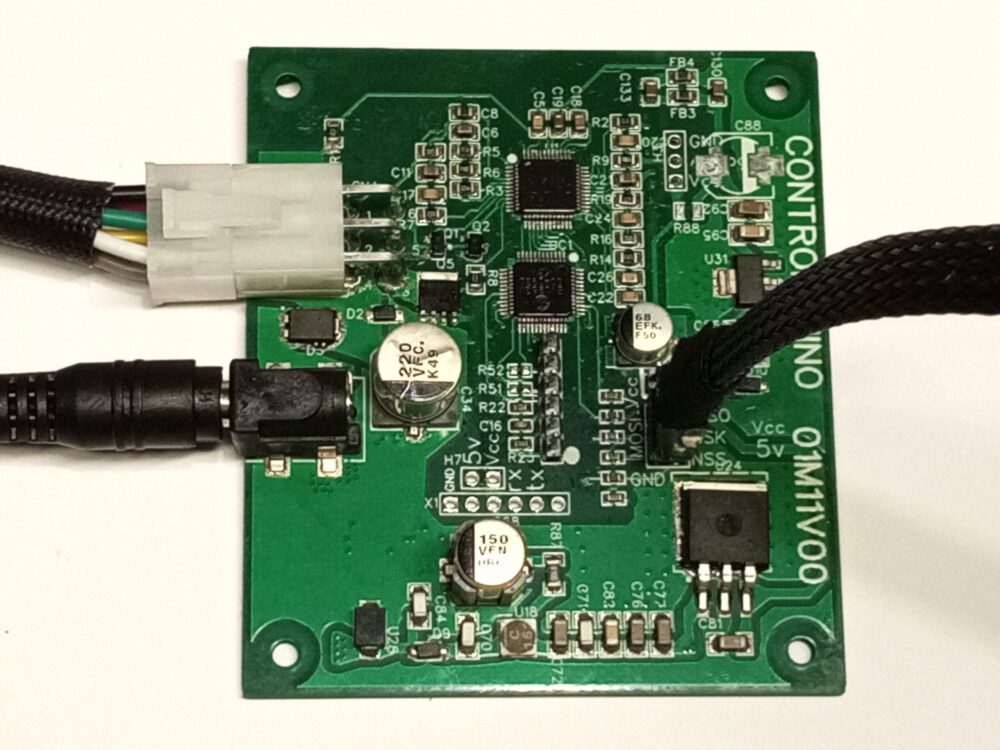
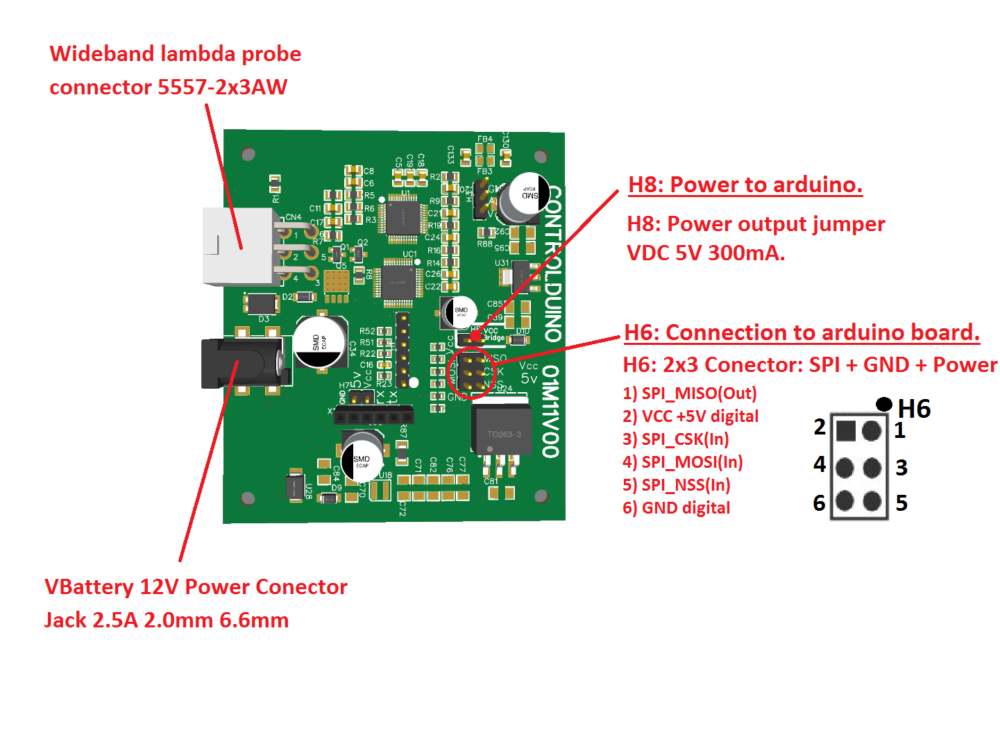
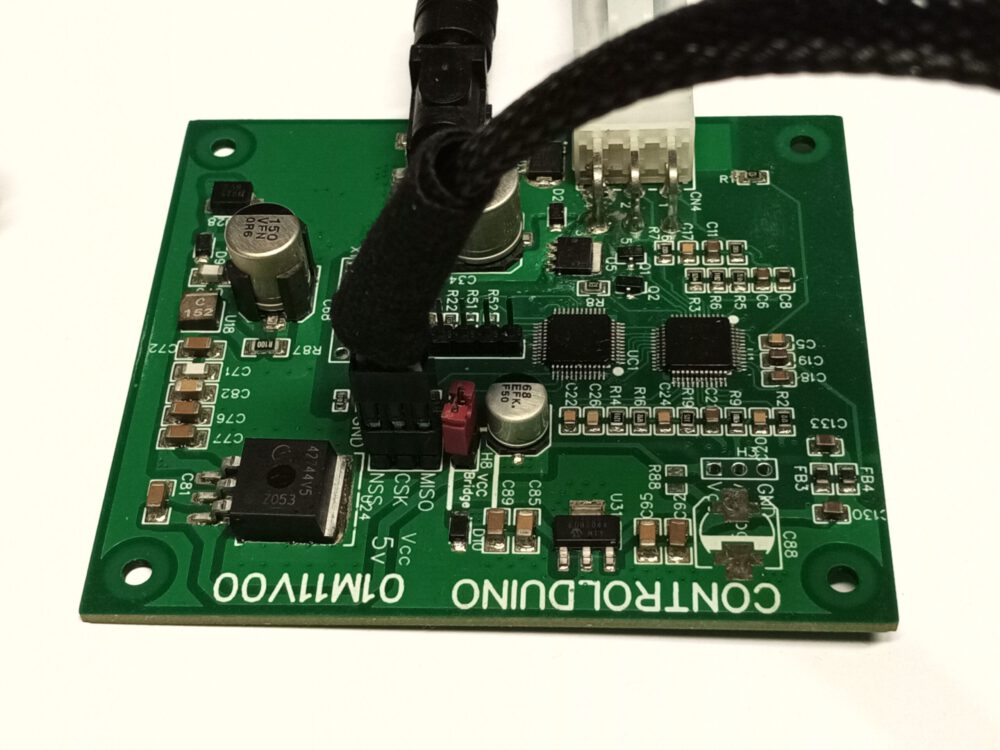
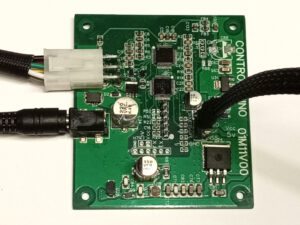
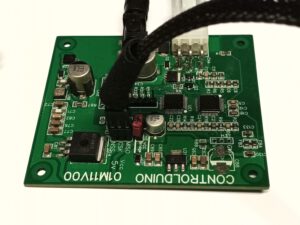
The Wideband lambda module for Arduino 01M11V00 measures the percentage of oxygen contained in the smoke or air, calculate the lambda and AFR (air-fuel ratio of combustion).
It can be integrated into any project quickly and easily, without wasting arduino board resources. All this thanks to the microcontroller integrated on the board that controls the temperature of the probe, performs all the calculations, monitors the diagnostics, and sends the data via SPI to the arduino when requested.
The library for arduino “Lambda.h” will take care of the control of the board, so that you can easily get the measurement. It will simply take care of the communication and some change of units, with it you can easily incorporate the module to your project easily and quickly and without previous knowledge.
It has a 5V output that will allow your arduino or small project to be powered, with a current of less than 300mA.
The microcontroller integrated in the module is in charge of:
- Diagnostics.
- Calculation of %O2 and AFR.
- With variable digital filter.
- With pressure variation compensation. (If the arduino sends it the smoke pressure).
- With temperature variation compensation.
- Max data sampling rate 100 samples / second
- Probe temperature control, and heating.
- Communication via SPI BUS with the arduino board. In the arduino through the library you will be able to turn on and off the module, request a value, etc.
- It stores configuration and setting data in its non-volatile memory.
All features
- Microcontroller integrated on the board: Microchip Technology dspic33EV128GM004
- Wide range air fuel sensor control interface STMicroelectronics l9780.
- Compatibility with wideband lambda probe BOSCH lsu 4.9
- Compatibilities with 5V arduino boards.
- Arduino UNO R3.(SPI comunication)
- Arduino UNO R4 mínima.(SPI comunication)
- Arduino UNO R4 WIFI.( SPI comunication)
- Arduino MEGA.( SPI comunication)
- Others, compatible but not tested.
- Compatible with 3.3 V Arduino boards via 3.3-5 V SPI adapter.
- Arduino Nano. (SPI comunication, with SPI adapter.)
- Others, compatible but not tested.
- Safe and efficient power supply to the arduino from 12V transformer input or car battery.
- Reverse polarity protection.
- Transient voltage suppressor.
- EMI filter.
- The digital circuit allows a power output with a 5V voltage of 300mA to power the arduino and small projects, such as a display or Bluetooth module. Through the H8 jumper.
- Noise reduction in the measurement. The analog circuit has its own LDO which isolates it from the noise of the digital circuit.
- SPI connections are short-circuit protected.
Library of functions
The library contains functions for sending commands, taking data and making more advanced settings, the main functions do the following tasks:
- Power on/off.
- Configuration.
- Reading data
- O2
- Lambda
- AFR(diesel, gasoline, other fuels…)
- Battery input voltage
- Other more advanced.
- Diagnostics
- Adjustment or calibration
- Enable or Vary the digital filter
- Enable o Enable compensation for pressure variation.
- Sending pressure data from the arduino to the module.
- Auto shutdown time adjustment.
The functions of the “Lambda.h” library can be found in the downloadable file “Tech manual and annex “.
Software available for Arduino:
- Display on Arduino IDE, serial monitor.
- PLME_1.0.ino: Basic operation to get started. Sends serial data to the arduino IDE. %O2 and AFR.
- PLME_1.1.ino: Basic operation to get started. Sends serial data to the arduino IDE, %O2 and AFR, V bat, Diagnosis, State…
- PLME_2.0.ino: Basic operation to get started 2. Sends serial data to the arduino IDE, allows adjustment of air to 20.95% oxygen, to compensate for probe errors, and pressure due to geodesic height …., diagnostic display.
- PLME_3.0.ino: (available soon) Sends serial data to the arduino IDE, allows adjustment of air to 20.95% oxygen, to compensate for probe errors, and pressure due to geodesic height …., diagnostic display, digital filter setting, auto-off time setting.
- PLME_3.1.ino: (available soon)(Pressure sensor required) Sends serial data to the arduino IDE, allows adjustment of air to 20.95% oxygen, to compensate for probe errors, and pressure due to geodesic height …., diagnostic display, digital filter setting, auto-off time setting. Continuous compensation of the error generated by the pressure dependence of the wideband lambda sensor signal (0.5 to 2.5 Bar). The arduino will need to send the gas pressure to the module continuously.
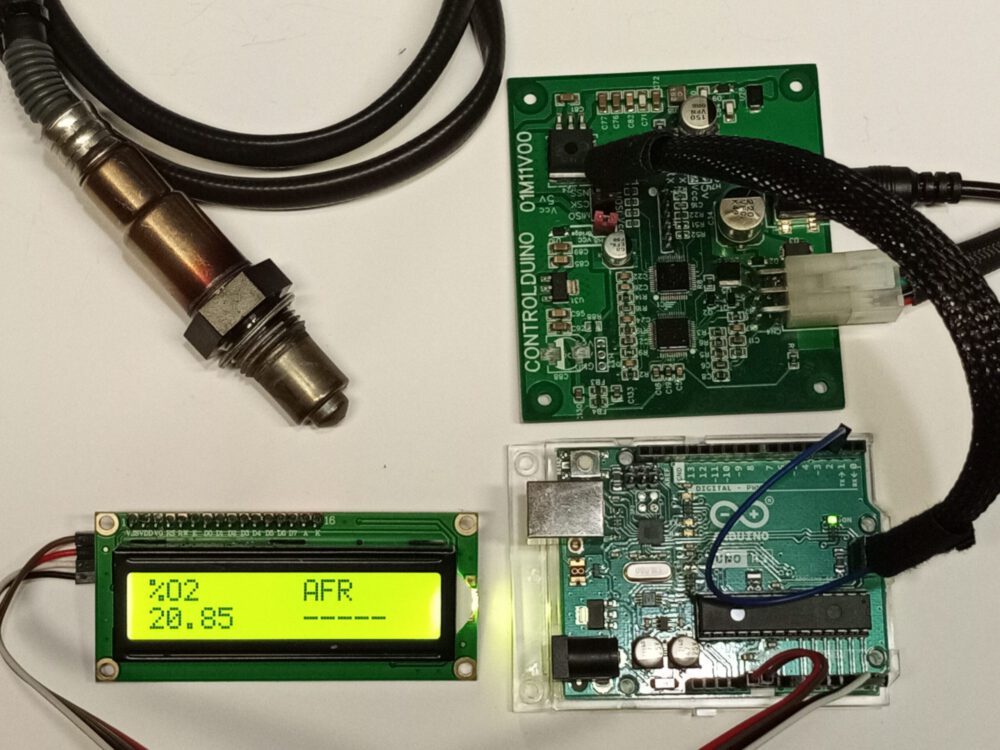
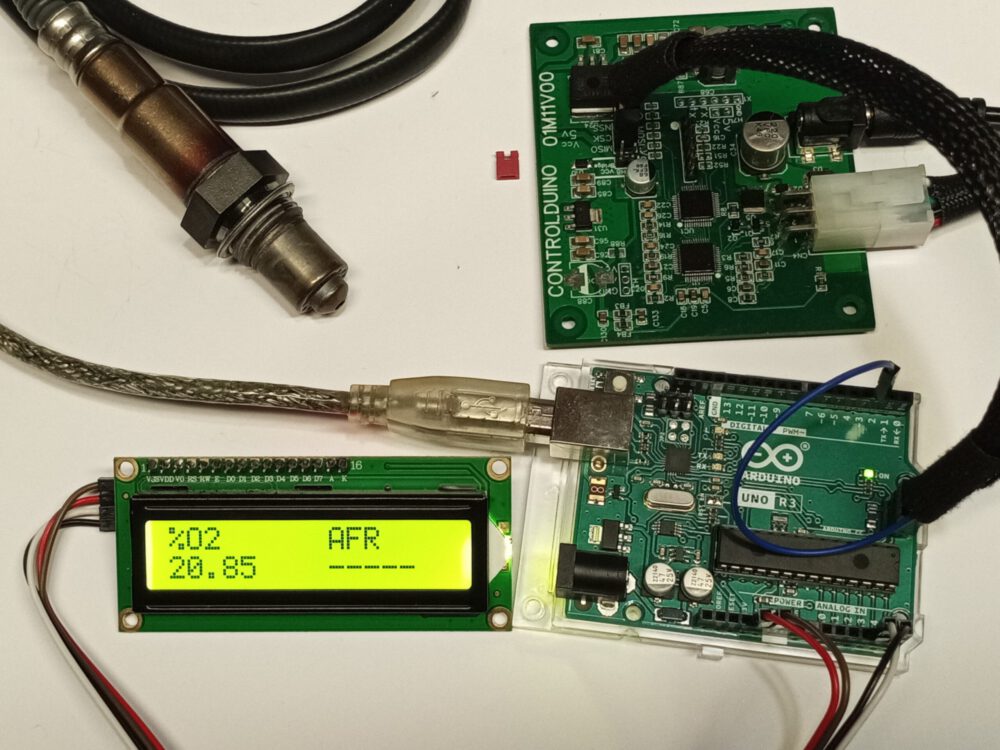
- Display on an LCD screen, (Library “LiquidCrystal_I2C.h”, display (LCD1602) with (LCD I2C( controller)).
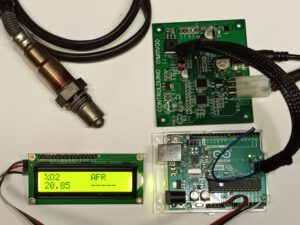
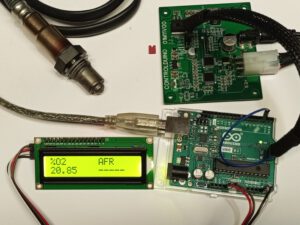
- PLME_4.0.ino: Display %O2, lambda, AFR on an LCD screen.
- PLME_4.1.ino: Display %O2, lambda, AFR on an LCD screen.. Display of the state when the measurement is not valid.
- Display on a Smartphone APP.
- PLME_5.0.ino: (HM10 bluetooth low energy module required). sends the data (Displays O2, AFR, Lambda,Vbat) to a mobile application via Bluetooth, where it can be displayed and/or stored.
- Control application1: Combustion control of a pellet cooker
- PLME_6.0.ino: (available soon) Optimisation control of a fire by varying the fan speed in a pellet cooker according to temperature data, %O2 of the smoke.
- Adjustment, error compensation, writing of non-volatile memory of the module.
- PLME_7.0.ino: This program is used to set the values of the non-volatile memory of the board for the following settings:
- Set the filtering value.
- Set the auto-off time of the module.
- Enable/disable the pressure compensation.
- Adjustment and calibration parameters.Adjustment and calibration, to eliminate all errors such as: Height dependent pressure variation, manufacturing tolerances of the broadband lambda probe and the module….. setting the air to 20.95% oxygen.
- PLME_7.0.ino: This program is used to set the values of the non-volatile memory of the board for the following settings:
- Several lambda modules connected to one Arduino board.
- PLME_8.0.ino: Two lambda modules for one arduino board, display %O2 and AFR from the two wideband lambda probes on Arduino IDE.
- PLME_9.0.ino: Two lambda modules for one arduino board, display on an LCD screen the oxygen percentage of both wideband lambda probes.
Smartphone App(HM10 bluetooth module required).
Switches the lambda sensor, displays battery voltage, oxygen percentage, lambda and AFR (air-fuel ratio) for different fuels on the smartphone screen. Is available for the following smartphone platforms:
- Android
- IOS(not currently available, available soon)
Required components
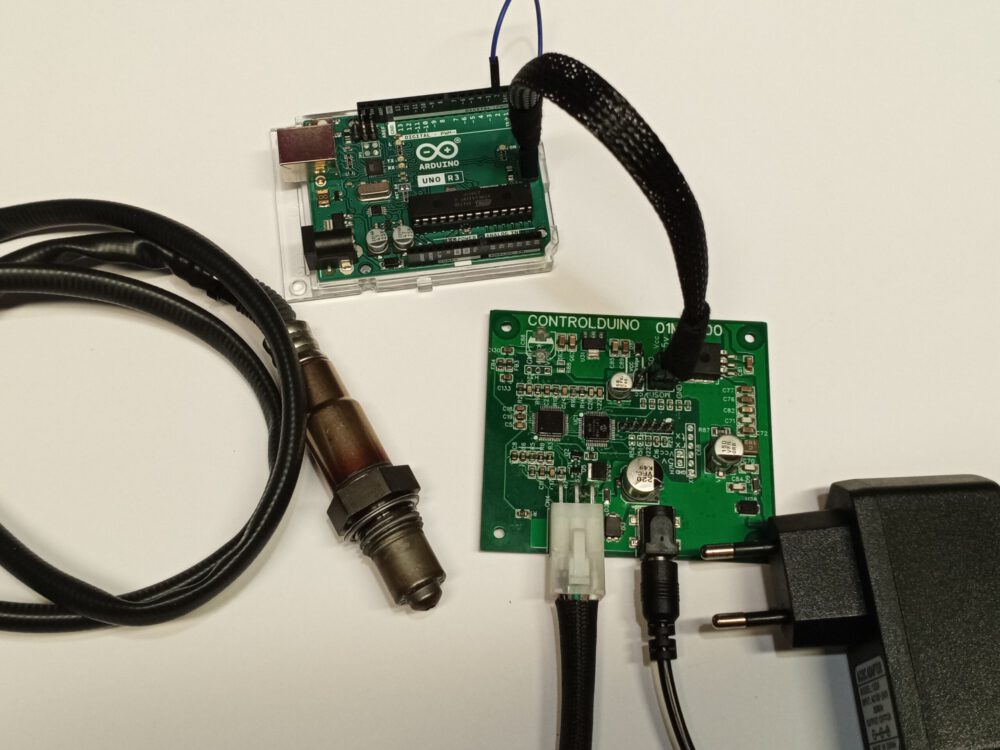
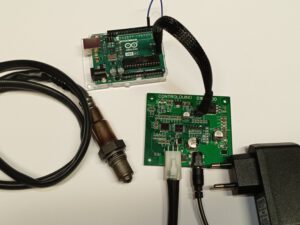
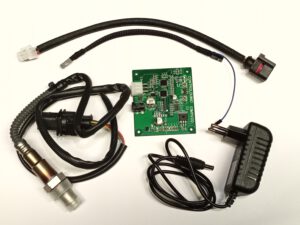
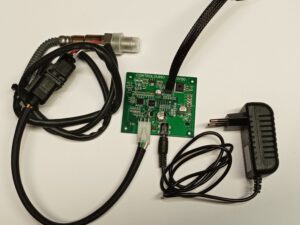
- Wideband lambda module for Arduino. Controlduino 01M11V00. — cables included:
- Wideband lambda probe connection cable (connector 1813139-1) with Shield (2×3 Connector 5557).
- DC power jack cable for the power supply
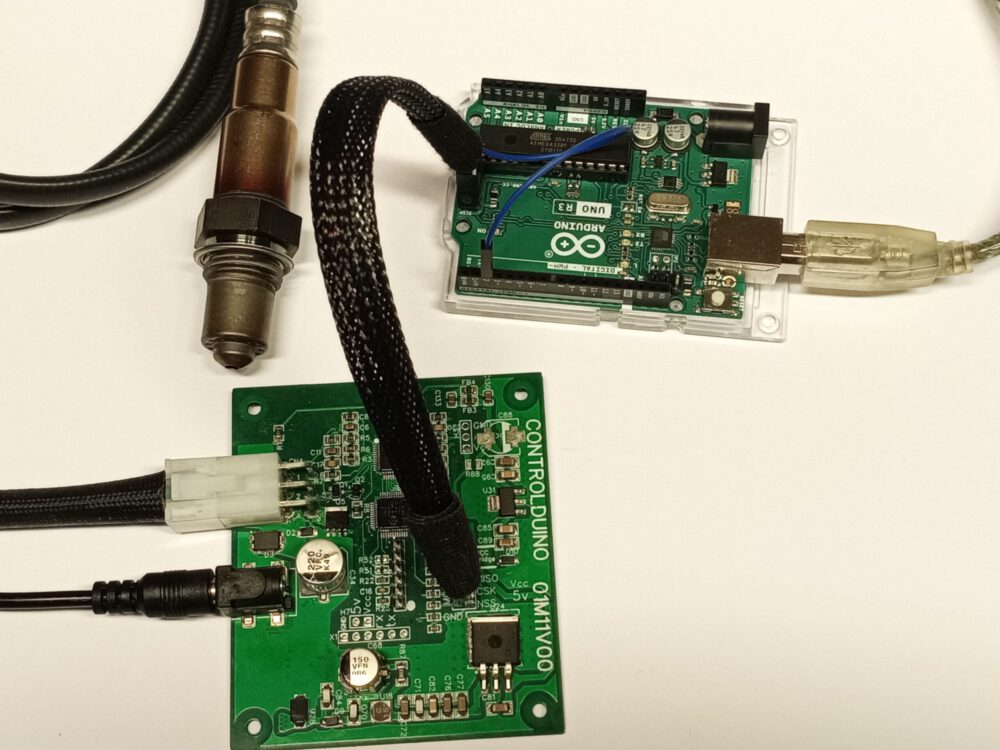
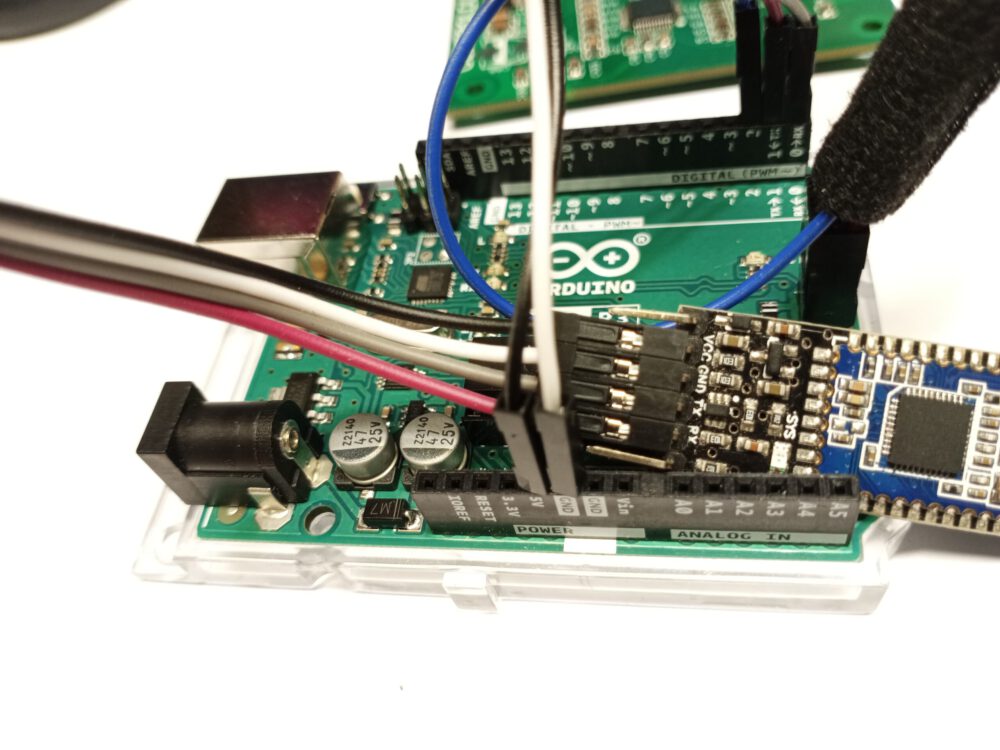
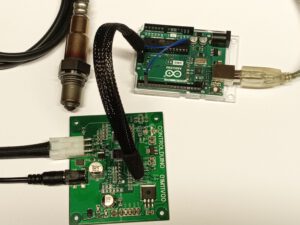
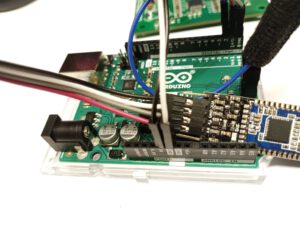
- 6-wire cable for connecting to Arduino
- Sensor. (Required for the installation. Add them in the product options if you do not already have one.):
- Wideband lambda probe, Bosch LSU4.9 or compatible.
- Power supply (only one is required).
- 12V battery.
- AC/DC power supply. 12V 3A. (Add it when configuring your order, only if need)
- Arduino board with USB cable.
Optional items (add-ons) :
(Add them when configuring your order, only if need)
- M18x1.5mm socket for a lambda sensor.
- M14x1.5mm socket for an exhaust gas temperature sensor.
- Logic level shifter for SPI, 3.3 V ↔ 5 V. (only for 3,3V Arduino boards)
- HM10 Bluetooth low energy module. (Only necessary for use with the smartphone application).
- …
230 V AC mains power. Not needed if you run it from a vehicle’s 12 V DC supply.
Logic level shifter for SPI, 3.3 V ↔ 5 V. Only needed with 3.3 V Arduino boards.
M18 x 1.5 weld-in bung for the lambda sensor, with optional blanking plug. Only needed if the exhaust or flue has no threaded port. Add the plug only if the sensor will be removed and the port has to be closed.
Datalooger Shield for lambda modules. Only needed for data logging.
Download
Tech manual and annex. Wideband lambda module for Arduino. Controlduino 01M00V00.

Library of functions

Software for Arduino

Smartphone App.

Component datasheet