Wideband lambda gauges and controllers for LSU 4.9
Wideband lambda gauges and controllers for Bosch LSU 4.9 sensors, for engine tuning and test benches. The Pro works on its own, with its own display and app. The module and the shield are made to be added to your own Arduino project.
Plug and play
No Arduino needed Its own microcontroller runs the display and Bluetooth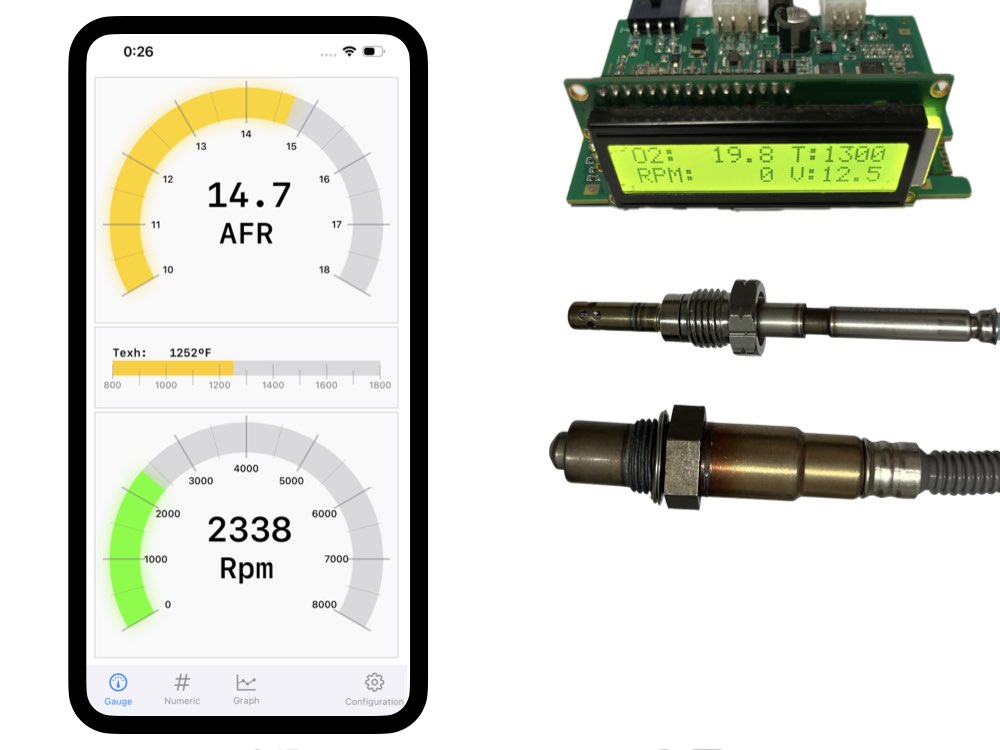
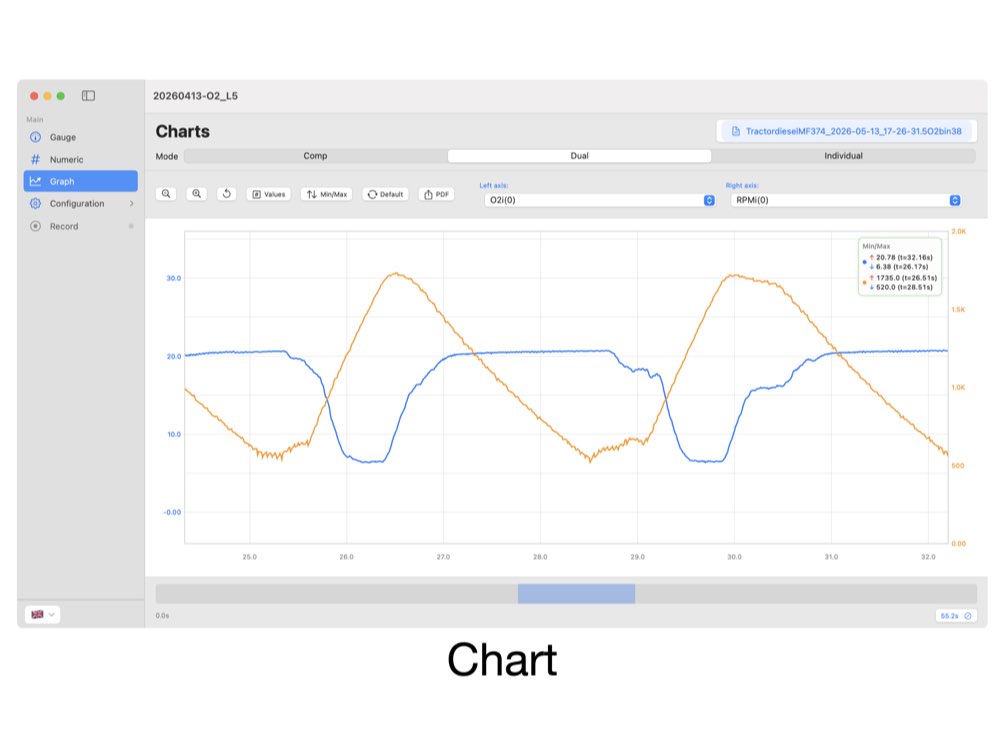
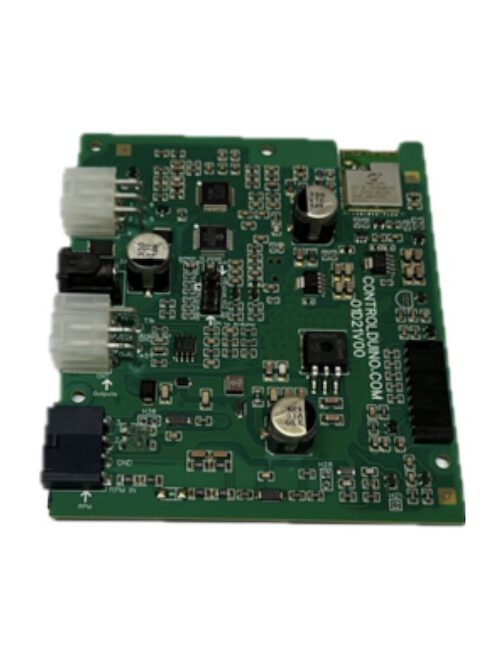
Pro Lambda 01D21V00
From €128 €99
Logs the history and shows it as graphs on your phone. You can also read it on its own screen.
MeasuresO2-Lambda-AFR · RPM · EGT- up to 1000 °C
For Arduino
Arduino required They do not work on their own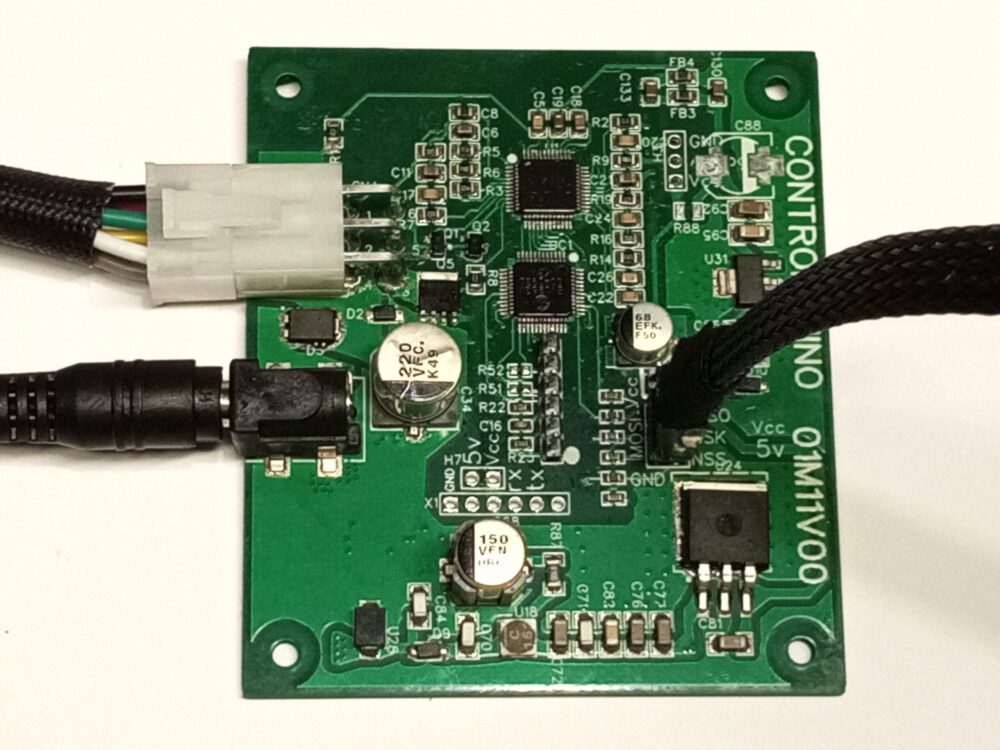
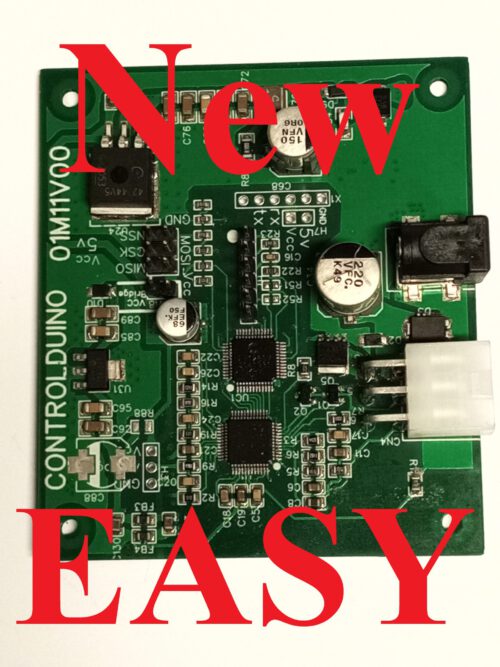
Lambda Module 01M11V00
From €000 €75
Add it to your project. Ask it, and it gives you the reading.
MeasuresO2-Lambda-AFR
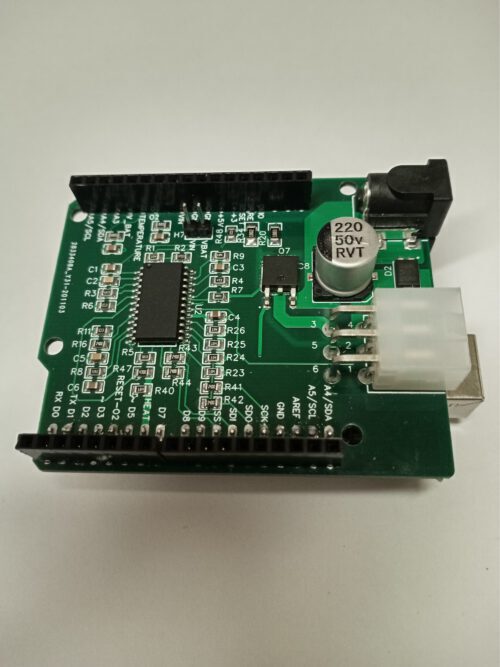
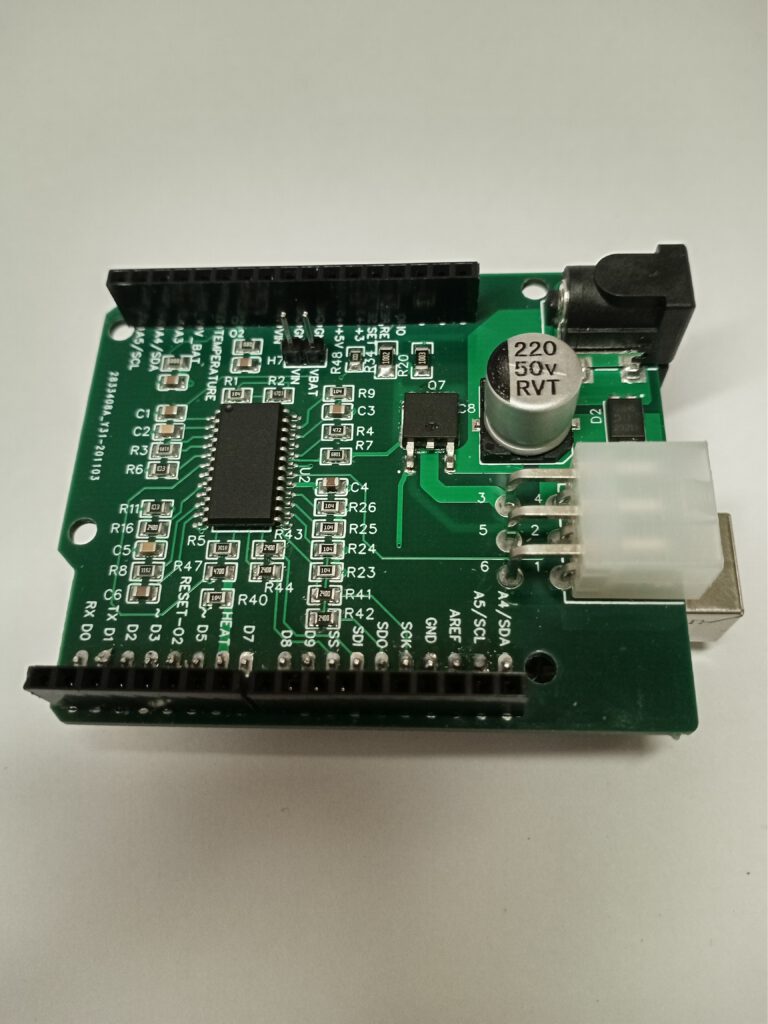
Lambda Shield 01S00V00
From €000 €53.30
Learn to use the chip. You write the code.
MeasuresO2-Lambda-AFR
Want a display, an app and data logging as well? The Pro Lambda 01D21V00 connects to Arduino too →
Which wideband lambda controller do you need?
Pick the one that comes closest to what you need.
Not sure? Send a short description of your setup to the email address on this site and we’ll tell you which one fits.
Pro Module (Device) 01D21V00 — choose this if you want:
- The highest performance of the range.
- True plug and play. Connect the cables and it works. Bluetooth and LCD included, no setup.
- The full data set: O₂, Lambda, AFR, RPM and EGT — exhaust gas temperature up to 1000 °C, or any other temperature source if configured.
- The advanced app. Live readings on Android, iOS and macOS. CSV logging and charting on iOS and macOS.
- No Arduino required — and no Arduino knowledge either.
- The option of both. Use it with an Arduino or completely standalone.
- Everything on a single board, with no wiring between boards.
If you want a reading without writing any code, choose the Pro. It powers the sensor, shows lambda and AFR on its own display, records the session and shows the history as graphs in the app. It does not need an Arduino — but it can send the data to one if you want to use it inside your own project.
Module 01M11V00 for Arduino — choose this if you want:
- O₂, Lambda and AFR from an Arduino as part of a larger project.
- To get the sensor measurements on your Arduino, easily.
- A board that lives inside your Arduino project, never a standalone gauge.
If you are building that project yourself, the module does the hard part for you: five lines of code and it returns the reading, over the SPI bus and using very little of your board. The library and working examples are included.
Note: The Pro Module 01D21V00 covers all of this as well, and goes further.
Shield 01S00V00 for Arduino — choose this if you want:
- To learn, with Arduino, how the Bosch CJ125 IC works, while taking simple O₂, Lambda and AFR measurements.
Compare the boards
All of them read the same wideband lambda sensor, but each board is different: extra sensors, programming effort, whether it runs without an Arduino, data logging. Compare and pick the one that fits your project.
| Pro Lambda 01D21V00 |
Lambda Module 01M11V00 |
Lambda Shield 01S00V00 |
|
|---|---|---|---|
 |
 |
 |
|
| Plug and play | Yes | Needs an Arduino | Needs an Arduino |
| Lambda sensor | Bosch LSU 4.9 | Bosch LSU 4.9 | Bosch LSU 4.9 |
| RPM | Yes | — | — |
| EGT | Yes, up to 1000 °C (1832 °F) | — | — |
| Bluetooth | BLE 5.1 | — | — |
| App | iOS, macOS and Android See details → |
— | — |
| Display | LCD 2×16 | — | — |
All three read the same Bosch LSU 4.9 wideband sensor. See how each one works with an Arduino →
| Pro Lambda 01D21V00 |
Lambda Module 01M11V00 |
Lambda Shield 01S00V00 |
|
|---|---|---|---|
| Works with an Arduino | Yes, optional | Yes | Yes |
| Works without an Arduino | Yes | — | — |
| Library | lambda_d.h |
lambda.h |
— |
| Effort to adapt it to your project | Low | Low | High |
| 5 V Arduino boards | Yes | Yes | Yes |
| 3.3 V Arduino boards | With SPI level shifter | With SPI level shifter | — |
| Arduino resources used | Low | Low | High |
| Several units on one Arduino | With hub, datalogger shield or wiring | With hub, datalogger shield or wiring | — |
| Data logging | With datalogger shield or APP (iOS or macOS) | With datalogger shield | — |
| Arduino pins used | 6 — SPI (4), GND (1), 5 V (1) | 6 — SPI (4), GND (1), 5 V (1) | Many |
| Format | Module | Module | Stackable shield |
The Pro also works on its own, with no Arduino connected. See the Pro →