Boards to control Bosch LSU 4.9 wideband sensors and compatible units from an Arduino.. The modules have their own microcontroller and talk to your Arduino board over the SPI bus, and the function libraries keep the Arduino code down to a few lines. The shield gives you direct access to the CJ125 chip. All of them come with working code examples.
Here are the add-ons that complete your setup and every module and shield we have made, current and discontinued. The comparison of current boards is on the Products page.
Add-ons
Extra boards for your Arduino setup: more modules at once, 3.3 V compatibility and data logging.
| Image | Part | Utility | Compatible Arduinos | Compatible modules |
|---|---|---|---|---|
 | Allows you to easily connect several lambda modules to a single arduino board. | UNO UNO WIFI MEGA Others | Lambda modules: 01M11V00. 01M21V00. 01M30V00. |
|
 | It allows a 5 V slave to communicate on a 3.3 V SPI bus, accepting multiple slaves. | 3.3V Arduino boards such as: NANO Others, | Lambda modules: 01M11V00. 01M21V00. 01M30V00. |
|
 | Datalogger Shield with MicroSD card and RTC. Controlduino 91S00V00. | It allows data to be saved in CSV format, and has connectors to facilitate the connection of lambda modules and I2C displays. | UNO UNO WIFI MEGA Others | Lambda modules: 01M11V00. 01M21V00. 01M30V00. |
All modules and shields
Every board we have made, current and discontinued. Open any model for downloads and support.
| Image | Part | Measure | APP | library | Type | Buetooth | Status | Lambda IC | Lambda Probe | Enhanced Power Supply | Voltage[V] |
|---|---|---|---|---|---|---|---|---|---|---|---|
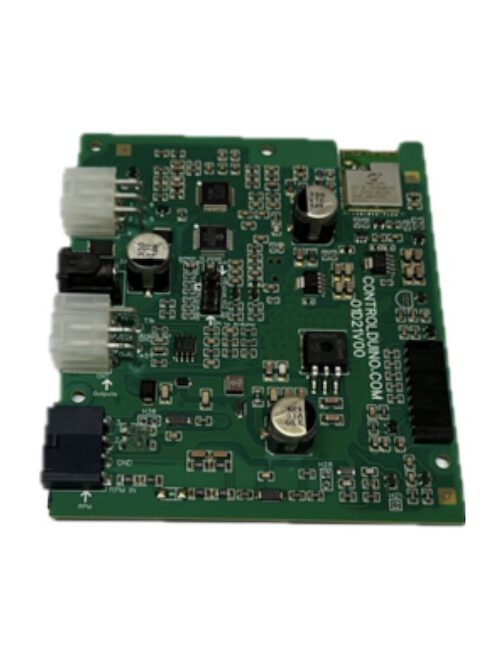 | %O2, Lambda, AFR. Wideband.+ RPM + EGT | iOS, macOS and Android See details → | Lambda_d.h | Plug-and-play module with its own microcontroller — works with or without an Arduino | BLE 5.1 | Available | STMicroelectronics IC - L9780 | Bosch LSU4.9 and others. | yes | 10.8 to 16.5 | |
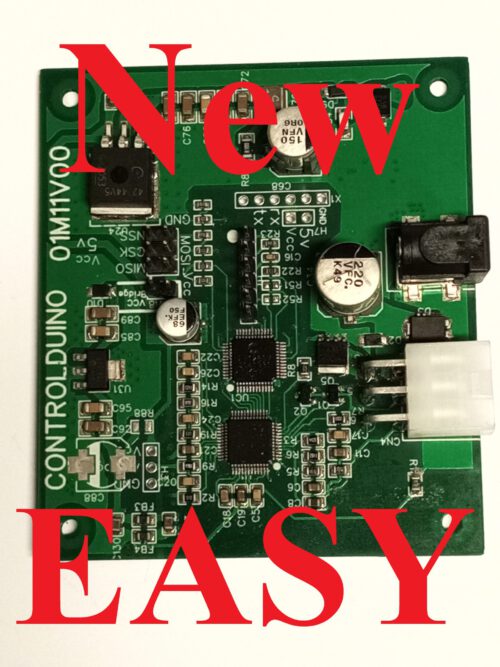 | %O2, Lambda, AFR. Wideband. | No | Lambda.h | Module with its own microcontroller | No | Available | STMicroelectronics IC - L9780 | Bosch LSU4.9 and others. | yes | 10.8 to 16.5 | |
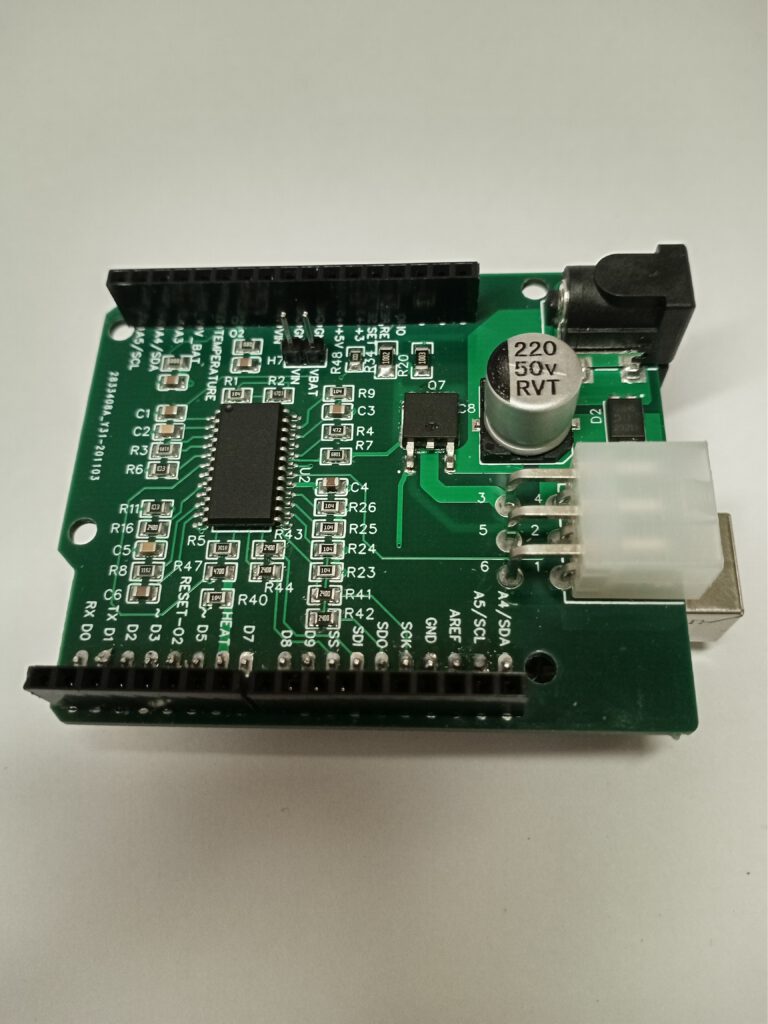 | %O2, Lambda, AFR. Wideband. | No | No | Shield | No | Available | Bosch IC – CJ125 | Bosch LSU4.9 | No | 10.8 to 16.5 | |
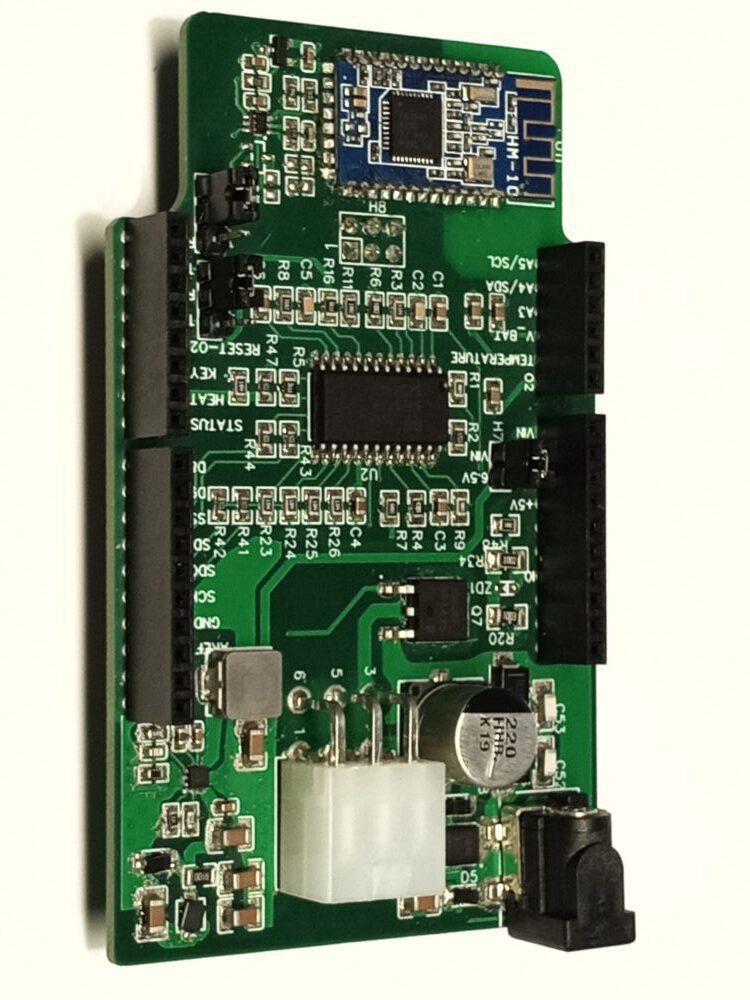 | Replaced by Pro Lambda 01D21V00 → | %O2, Lambda, AFR. Wideband. | Android: Legacy app — live readings only | No | Shield | BLE 4.0 | Last units | Bosch IC – CJ125 | Bosch LSU4.9 | yes | 10.8 to 16.5 |
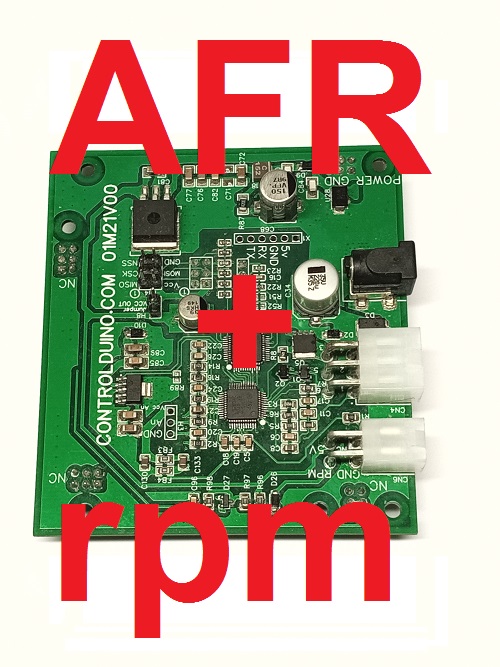 | Replaced by Pro Lambda 01D21V00 → | %O2, Lambda, AFR. Wideband. + rpm | No | Lambda_rpm.h | Module with its own microcontroller. Stackable with 02S00V00 | No | Last units | STMicroelectronics IC - L9780 | Bosch LSU4.9 and others. | yes | 10.8 to 16.5 |
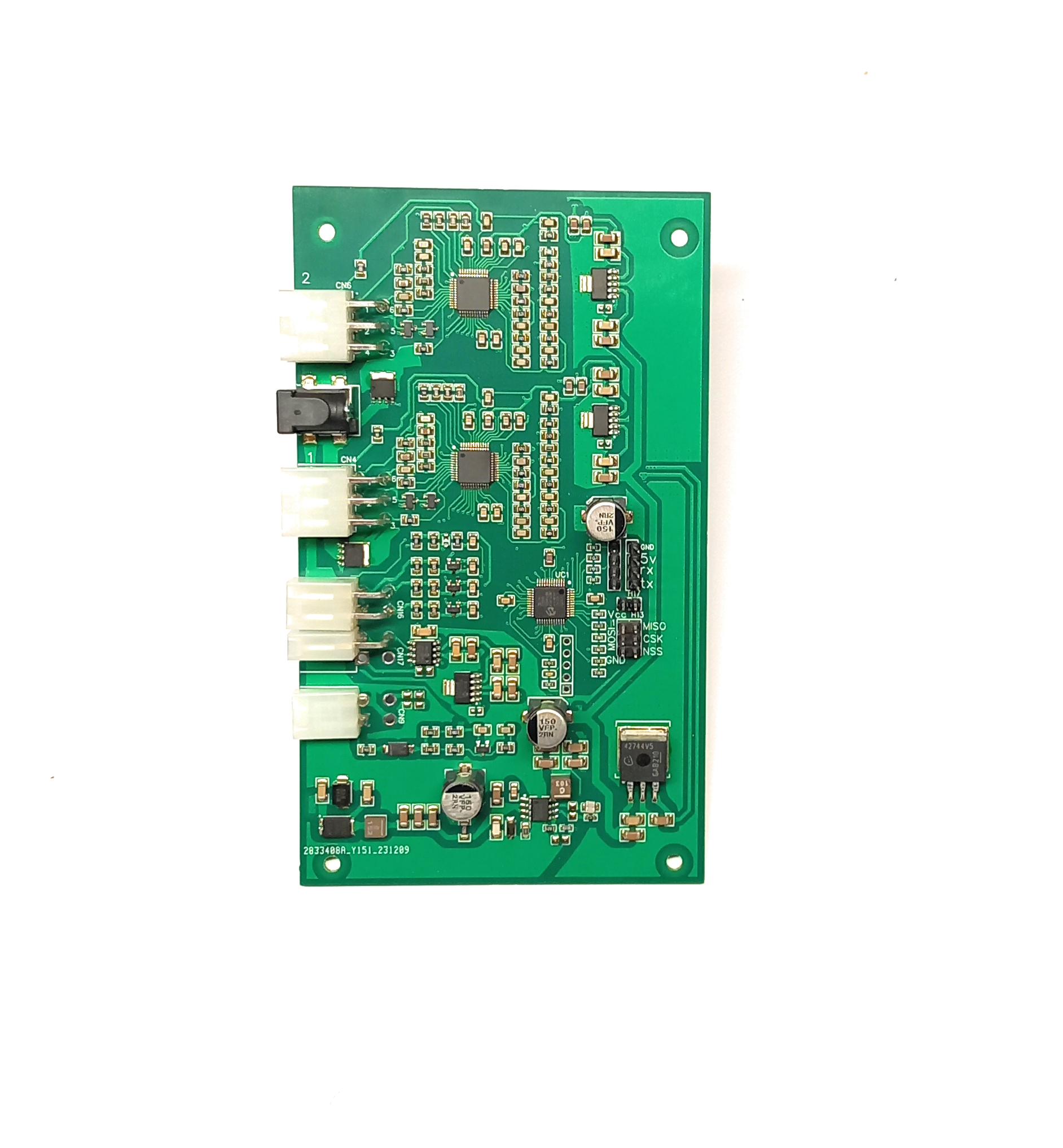 | Replaced by 2 x Pro Lambda 01D21V00 → | 2x(%O2, Lambda, AFR. Wideband.) + rpm | No | LambdaX2_rpm.h | Module with its own microcontroller. | No | Last units | STMicroelectronics IC - L9780 | 2 x Bosch LSU4.9 and others. | yes | 10.8 to 16.5 |
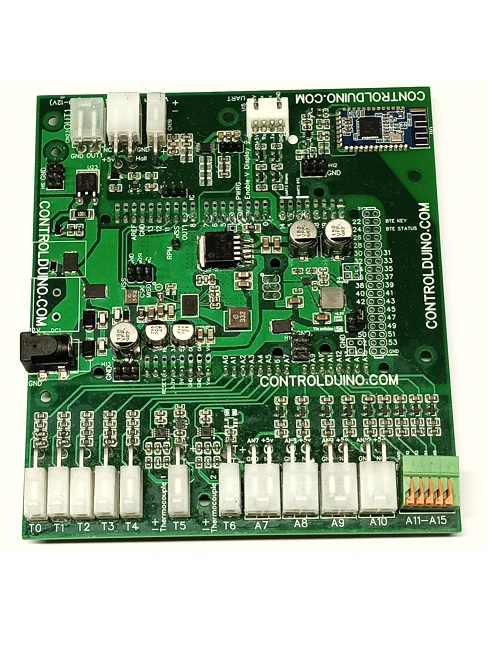 | 02S00V00 | Temperatures, Pressures, Analogue inputs, Inductive sensor. | No | No | Stackable shield. 01M21V00 stacks on top of this board. | BLE 4.0 | Discontinued | yes | 10.8 to 16.5 |
In summary: all modules and shields for Arduino.
Lambda Pro Module (D) Device
- Plug and play: connect the sensor and power cables and it starts working.
- No Arduino needed to operate. Its own microcontroller also drives an LCD display and Bluetooth.
- An evolution of the modules: connected to an Arduino it does everything a module does (it has its own Arduino library).
- Configurable from the Android, iOS and macOS app: lambda probe settings, RPM settings, which values appear on the LCD, and analogue output configuration.
- The app also provides: live readings (Android, iOS and macOS), data logging to .CSV at up to 100 samples per second (iOS and macOS only), and charting (iOS and macOS only).
- Advanced apps, under continuous development.
- Models:
- 01D11V00
- Measures O₂, Lambda, AFR, RPM and EGT
- Plug and play: connect the cables, power it up, and it works
- Display connector
- Integrated Bluetooth 5.1
- 01D11V00
Lambda (M) Modules for Arduino.
- Compatible with the Bosch LSU 4.9 wideband lambda probe
- Arduino function libraries included, making it easy to program and integrate into your projects
- Its own microcontroller performs all calculations and control; data is sent to the Arduino over an SPI bus, so the Arduino uses almost no resources
- Connects to the Arduino with just 6 wires, gathered into a single 2×3 connector
- Uses very few of the Arduino’s resources, thanks to its internal microcontroller handling the control and calculations
- Models:
- 01M11V00 — measures O₂, Lambda and AFR
- 01M21V00 — measures O₂, Lambda, AFR and RPM
- 01M30V00 — two lambda probes: 2× O₂, 2× Lambda, 2× AFR, RPM and two analogue inputs
- 01D11V00 — works like the rest of the models, and additionally offers its plug and play features, with no Arduino required
- Measures O₂, Lambda, AFR, RPM and EGT (up to 1000 °C). Integrated Bluetooth. Works with or without Arduino. Configurable from a smartphone app.
- Android app: live readings and device configuration (evolving in future versions)
- iOS and macOS app: live readings, device configuration, data logging with .CSV export, and charting
Lambda (S) Shield for Arduino.
- Lambda probe interface based on the Bosch CJ125 IC
- Compatible with the Bosch LSU 4.9 wideband lambda probe
- The Arduino controls everything, which uses up a large share of its resources
- Stacks onto the Arduino and uses many of its pins
- Not well suited to integration into more complex projects
- Models:
- 01S00V00
- 01S01V00 — as above, but with integrated Bluetooth (including a small viewer app that refreshes three times per second) and an improved Arduino power supply.